Friday, March 16, 2012

this rocks, no bones about it

Tyrannosaurus rex fossil


At natural history museums, the star attractions are usually the dinosaur skeletons. Kids usually can’t wait to see the T-rex, brontosaurus, and stegosaurus bones. But little do they know that what they are seeing are not actually the bones of the dinosaurs. They are fossils.

Fossilization, in the simplest sense, is the preservation of what was once organic into something inorganic. Bones are the most recognizable fossilized things, but not the only and certainly not the most common. Just to name a few things that can be fossilized: shells, tracks left in the ground, pollen, imprints of animals, wood, and poo. (A fossilized piece of poo is called a coprolite.) But today, we’re just going to cover the fossilization of prehistoric animal bones, since generally people deem them the most exciting.

To be fossilized, an animal must die in just the right place at the right time. In fact, lots of things must go right. First off, it must be buried immediately or very soon after death. It must stay there for a very long time, allowing all soft tissues to degrade. Just the right type of rock must begin to cover the remains. The remains must resist the tremendous pressure of the resulting rock over millions of years. And then some jerk has to find it. What are the chances of all that happening? It’s amazing we have as many fossils as we do.
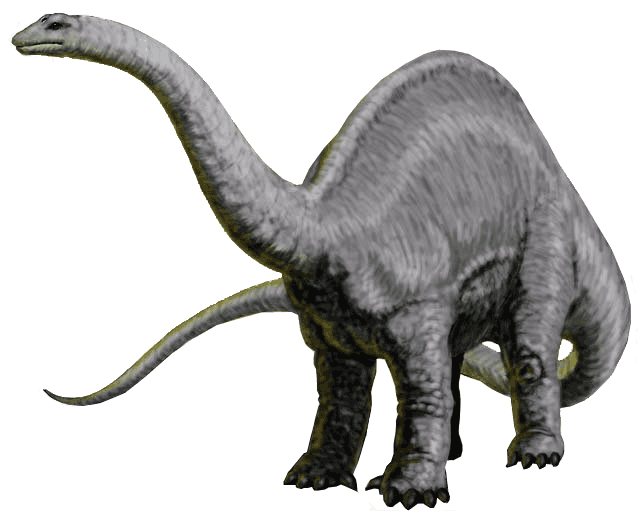
Apatosaurus Louie (rareresourse.com)
To make this process a little less abstract, let’s talk about a specific example. An Apatosaurus named Louie is taking a walk 152 million years ago when he breaks his leg while drinking from a riverbed. Louie struggles to walk but can’t, and dies from starvation a few days later. The water and the sediment suspended within it begins to cover Louie up. After a while, he is totally buried beneath the sediment. By then, the decomposition process has started. Skin, muscle, and connective tissue becomes gooey and breaks down. Water and body fluids dissipate into the surroundings. After a short while, only inorganic body parts are left- bones, teeth, etc. Now we jump into warp speed-  because the rest of the fossilization process takes millions of years.

More sedimentary rock (like the rock in the Grand Canyon) begins to form on top of Louie’s final resting place. Rock begins pressurizing his bones, and minerals and microscopic bits of rock are forced into the tiny open spaces of his bones. As time goes on and the pressure becomes greater, so does the level and detail of fossilization. The inorganic minerals that were original to Louie’s bones (like calcium) are still there, but the empty spaces are now filled with rock. Louie’s bones have been rock-ified. The podcast “Stuff You Should Know” from howstuffworks.com likens this process to filling a sponge with glue- the original minerals of Louie’s bones are still, but sort of cemented in position. So really, the fossilized skeletons you see at museums are more rock than they are bone.

Now Enter Dr. Grant. In order to be found, the rock in which Louie was preserved must have moved and shifted over the millenia in such a way that his remains are relatively close to the surface, or side of the rock. Someone has to know to look there… which is improbable and then requires a whole lot of luck. Then someone who knows what they’re doing must exhume the remains without effing up. The chances of an animal’s remains making it all the way into a natural history museum are miniscule. But those fossils that we have found and unearthed comprise the fossil record- which is all of the fossils we have found considered as a whole in the context of where they appear in the strata. The fossil record tells the chronological story of the evolution of life on earth.

Lots of evolution opponents argue that the lack of a complete fossil record is evidence against evolution. They argue that if animals evolve slowly and gradually, we should have record of all the stages in between the old and new fauna. Where’s the man-monkey, they ask? Where’s the bird-dinosaur? Where’s the fish-landanimal? “Show us the transition fossils!” they say.

Now being more familiar with the fossilization process, what would you say to them? Hopefully something along the lines of, “fossils aren’t a dime a dozen, PAL,” or “only a fraction of the species that lived were lucky enough to be fossilized, BUDDY,” or "we only are able to locate a small percentage of the fossils, FRIEND." And then, start naming the incredible transition fossils we do have.
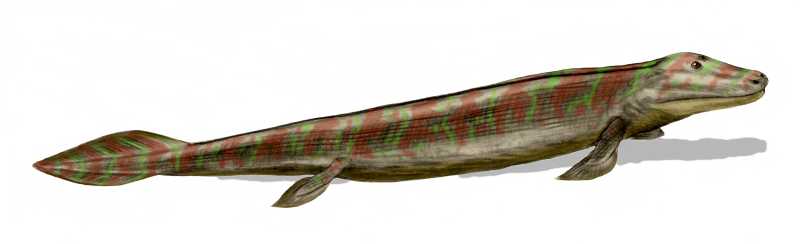
File:Tiktaalik BW.jpg
Tiktaalik- link between fish and tetrapods. Fossil found in ice regions of Canada (wikicommons)


Fossil of complete Archaeopteryx, including indentations of feathers on wings and tail.
Archaeopteryx- link between dinos and birds. Fossil found in Germany. (wikicommons)
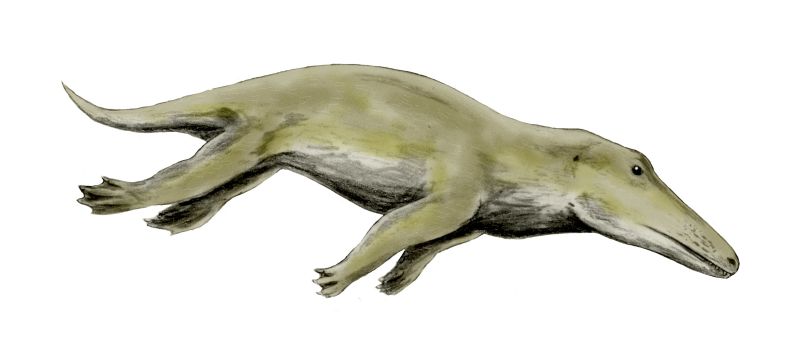
File:Ambulocetus BW.jpg
Ambulocetus- link between land animals and whales. Fossils found in Pakistan (wikicommons)


I mentioned the Podcast “Stuff You Should Know” from howstuffworks.com. I recommend you go to iTunes and subscribe to it right now. It’s free. Josh and Chuck, the hosts, explain all sorts of cool things from withcraft to dark matter. And they’re pretty funny. 

Friday, March 9, 2012

when two plants love each other very much


I know I’m not the only one who is sneezing with an itchy face and eyes this week. Cars are turning yellow and you literally have to windshield-wipe off the pollen in order to drive. But even though we are all covered in plant sperm, we can still appreciate the miracle of pollination with the onset of spring.
Male cones on the left, female on the right (emhsbot-zoo.wikispaces.com)

With exceptions here and there, there are no such things as “girl plants” and “boy plants.” Let’s take a pine tree for example (they’re the main culprits to blame for your car right now, FYI): a single pine tree has both male and female structures. The pinecone is the female structure, and the little yellow dangly things are the male structures. The yellow dangly things release the pollen, and the cones receive. And lots of plants have what you could consider an allergy to their own pollen so that they cannot self-fertilize. This way, pine trees swap pollen with each other to increase genetic diversity and have healthier baby pine trees. In this case, wind is the main vector by which trees swap pollen.

Insects are also vectors for pollination. A bee, for example, might land on a daisy. As it sticks its face down into the flower to lick out nectar, pollen gets stuck on its little legs and underbelly. Then it flies to the next flower and sticks its face into it, all the while pollen from the previous flower getting all over this one. Without even realizing it, the bee has brought pollen from one flower to another. Clueless little flower-sex-enabling insect.

Looks like a bee! (fs.fed.us)
Oh but don’t worry, there are even more clueless insects than these daisy-pollinating bees. Orchids, an especially dazzling group of flowering plants, have evolved some unique pollination adaptations that take advantage of their insect pollinators. Some of them, to put it simply, look like an insect in order to trick a member of that insect species to try and mate with it. The unsuspecting bug will enthusiastically rub its little insect self all up ON that orchid, becoming covered in pollen. Once the bee realizes that it’s trying to have sex with a flower and it checks to make sure its friends didn’t see, it flies off to the next orchid and does it all over again. What’s a bug gotta do for some same-species lovin around here?!

Looks like a wasp (whyevolutionistrue.wordpress.com)


It’s important to remember that this mechanism is the result of evolution, and not cognitive trickery on the part of the orchid (it’s a plant). Nonetheless, the resulting flowers are astounding.


SUCKER! (eyesseetheworldspinninground.blogspot)


Happy spring break, all.

Friday, March 2, 2012

shake ya orange-colored rectrice

Last night, my significant other took me to my first real-live concert in Atlanta. We had floor tickets, meaning we were right up close to the stage (I could see Thom Yorke’s eyeballs). My first real, indoor concert was a success- they even played my favorite song. I was on a Radiohead high as we left.

Once we got back to the car, I began to notice that everything sounded sort of muted. Kind of like when you have a cold and sounds are muffled and dull. After expressing concern that I might be having a stroke or spontaneously going deaf, he explained that it is normal after concerts to experience this. Jeez, the music didn’t sound that loud to me. Hearing is more sensitive than we think.

Notice the bright yellow tail tip (commongroundsonline.com)
A group of 6 birds let me know this morning that my hearing was back. As I left my apartment for work, I heard the soft wheezy calls of Cedar Waxwings perched way up high in a tree. These birds used to provide me cheap amusement during my ornithology labs when I was a senior. There were a bunch of big burly dudes in the class who could never hear the Cedar Waxwings calling. The TA would point out the wheezy sound, and everyone would turn their heads in the direction of the birds to get a better listen. The guys dressed in camo, turning their heads furiously (but not so fast as to sling out their dip) would try hear what everyone else did. But they couldn’t- years of hunting with loud guns had destroyed their ability to detect sounds in such a high frequency range. The poor guys will never be able to enjoy the Waxwing’s call.

I’ve mentioned Cedar Waxwings before- I think they are the bees knees. They are very pretty, and the crests on their heads makes them all look like little bird royalty. They are called Waxwings due to waxy-looking red structures that decorate the tip of their wings. Another pretty attribute are the tips of their rectrices (fancy word for tail feathers)- which were usually a bright yellow. However, a curious thing started to happen in the mid 1960’s. Some Cedar Waxwings’ rectrices turned orange.

When birds have red, yellow, or orange colors, it’s due to pigments called carotenoids. The tricky part about carotenoids is that they cannot be manufactured by the body. Vertebrates simply do not have the physiological machinery to make them. So then, how do birds show colors based on pigments their bodies cannot make? Answer: they eat them.

Birds acquire carotenoids via their diet, usually from brightly colored berries that contain carotenoids. When people started looking in to the orange-tip phenomonen, they found that it coincided with the introduction of a new species of honeysuckle whose berries contained a red carotenoid pigment called rhodoxanthin (road-oh-zan-thin). Come to find out, the orange tips were a result of the consumption of these newfangled red berries. New red carotenoids and the standard yellow carotenoids make orange. Pretty cool, eh?

I had never actually seen an orange-tipped Waxwing, until recently. And I didn’t even see the bird. I found three feathers out in the woods with strikingly beautiful yellow-orange tips. It was one of the most gratifying discoveries I’ve ever made. Technically, it is illegal to be in possession of any migratory bird’s feathers due to the Migratory Bird Treaty Act. So I definitely did not take them. And this is definitely not a picture of them. And I definitely don’t sleep with them by my bed.


This is a cool paper that breaks down the tail tip coloration story:

Evidence supporting a dietary basis for orange-tipped rectrices in the Cedar Waxwing by Mulvihill, Pakres, Leberman, and Wood. Journal of Field Ornithology, Vol. 63, No. 2, Spring, 1992.

Friday, February 24, 2012

stop exploding your melanocytes

I really hate to see girls going to tanning beds. I even get nervous when I see people lay out in the sun without sunscreen on. Yes, yes, I know- the warmth feels so nice and you look like you belong in a Ralph Lauren magazine ad afterwards. That’s just a misleading coincidence, though. A tan is literally the observable result of directly damaging your skin via radiation. Won’t be so cute when you’re only 30 and your chin skin is already drooping, you have brown spots all over, and wrinkles you shouldn’t have until you’re 50.
Big brown blotch is a melanocyte releasing melanin
into the skin.
Melanin is the brown/black pigment in your skin, and is made and released by cells called melanocytes. Everyone has melanin (except albinos), although the amount of melanin people produce varies. Interestingly enough, it has been found that everyone, no matter ethnicity, has the about the same amount of melanocytes. What determines skin color is DNA, and whether it tells them to make melanin or not. Black and Indian people’s melanocytes tend to produce more than Viking-type folk, so they appear darker.

 
Melanin exists in your skin to help absorb the ultraviolet radiation you get from the sun. UV radiation literally bursts your melanocytes (sounds violent, doesn’t it? Yeah. It’s not good. Stop going to the tanning bed.) so that melanin is released into the skin to act as a sort of protective blanket for your dermal tissues. That tan and glowy girl working in American Eagle is really wearing one big skin Band-aid.

Back in 1986, there was an explosion and subsequent fire at a nuclear power plant in Ukraine. The fire caused a radioactive gas to float across an extensive landscape and into the atmosphere, sending civilians into a panic and mass exodus. The radiation wiped out life in the area. Birds, fish, mammals, bugs, you name it. And what didn’t receive lethal amounts of radiation and survived was still radioactive. Nothing thrived in this environment… until recently.

In 2006, Chernobyl research robots found a curious black fungus crawling on the walls of old reactor. Samples were taken and it was found that it had an enormous concentration of melanin. This fungus had adapted to the radioactive environment via high melanin production. While it does not “de-radioactivate” the radiation, it sort of stores it as a means of energy acquisition.

Researchers have conjectured that this may be a means of energy production in the future. Since the fungus is harnessing energy, maybe it could be eaten as an energy-rich food. Or maybe astronauts could use it to absorb the excess radiation they’re continually exposed to. I’m sure we’ll see something come of this in the future.

I, however, point out that if melanin is produced in a black crawling fungus in Chernobyl to absorb leftover radiation, it exists in us for similar reasons. The difference is, we cannot capture the energy in a beneficial way like the fungus. Instead, radiation causes the breakdown of skin elasticity and the increased likelihood of cancer. This being said, let me clarify that moderate sun-exposure is in no way comparable to the radiation at Chernobyl. But this little melanin story should get you thinking. Your skin reacts to the tanning bed in same way that this fungus has reacted to nuclear radiation… increased melanin production. 
Please.

Friday, February 17, 2012

happy major histocompatability complex day

I hope all of you had a nice Valentine’s Day- whether it consisted of celebrating it with your sweetheart, gorging on Ferrero Rochers and watching TV by yourself, eating appetizers and drinking wine with your friends, or ignoring the holiday altogether.

So in the spirit of romance, I want to talk about a study that specifically looked at female -> male attraction in humans, more scientifically known as “mate choice.” You may have heard of this particular experiment, as it was groundbreaking and applicable to everyone. Basically, they had 6 guys wear tee-shirts for a few nights without washing them, and then had a bunch of girls smell them and rate them on how good they smelled. Consistently, girls liked the smell of tee-shirts worn by guys with the most differing MHC (major histocompatability complex) from their own, and disliked those worn by guys with similar MHC’s. MHC-whaaaaat? I’ll explain.

In the most very basic sense, MHC a protein profile. All of your cells have a membrane, like the skin of a balloon. Except your cell membranes are not smooth; they have tons of proteins sticking out of the surface. A specific group of these surface proteins are involved in your immune system, and they are coded by a long sequence of genes called the major histocompatability complex. Complex is an appropriate word, since 128 genes determine the MHC. As you can imagine, everyone’s is intricate and different.

So, why would we prefer mates who had different MHC than our own? It all has to do with increasing genetic variation. For one, people with really different MHC’s are less likely to be related to you. So it decreases the chance of mating with a relative. Furthermore, if you are to mate with someone with dramatically different immunity proteins, then your kids are likely to get a wide variety of immunity. Ah lah, healthier offspring.

But the story doesn’t end there. Girls that were on the pill had reversed preferences. They preferred the scents of guys with more similar MHC, which is just completely screwy and in no way advantageous. Ladies, when it comes time to get serious and find yourself a husband, I would consider going au natural for a while so that you aren’t out at bars trying to pick up your second cousin.

I think the next step in this might be to look at gay people’s mate choice in relation to major histocompatability complex. This study only considered straight people. But if we remove the gender variable, I’m willing to bet the exact same thing is happening with gay peoples’ mate preference.

Here, one might be tempted to say that we’re all just bags of chemicals and love is just the result of hormones and pheromones. But I don’t buy that. I think it’s a large part of it, but certainly not all of it. I’m confident that there’s more going on than just chemical pathways.

So if you have a special someone, be sure to tell him or her that you care about them deeply… and that you find their MHC irresistibly different from your own. That’s sexy, right?


Notes:

MHC is super complex, so if you want to know more, I encourage you to look into it. Better yet, find a molecular nerd to tell you about it.

The study is described in the paper MHC-dependent mate preferences in humans by Claus Wedekind, Thomas Seebeck, Florence Bettens, and Alexander J. Paepke. Published in The Royal Society’s Proceedings: Biological Sciences, Vol. 260, No. 1359, June 1995.

Friday, February 10, 2012

eye hope you like this

Lizards and frogs have three eyes. Say WHAAA?! Think real hard; picture them in your mind. Only remember two eyes, right? But I kid you not, there is another eye (lesser developed and often unnoticed) sitting right atop their heads. It is scientifically known as a parietal eye, or “third eye”.

When we think of the word “eye,” we think of the well-developed organs in our faces that are capable of sensing light in such detail that they can form real-time images of our surroundings. To say that the parietal eye falls in this category would be misleading. Really, a better descriptor would be “light sensing organ.” It is part of the epithalamus of the brain (hence its location atop the skull) and functions not in sight, but rather in circadian rhythm regulation.

Get your mind out of the gutter, it's the pineal gland.
 (humanityhealing.net)
The pineal gland is part of the epithalamaus and produces hormones. These hormones are specifically functional in what I can best describe as “body timing.” Wake/sleep and reproductive cycles, and other cycles that fall under the blanket of circadian rhythms. The parietal eye is connected to this gland and feeds it information on light surroundings. Basically, it senses day-length so that the brain can figure out what time of the year it is so it can regulate hormonal cycles.

We humans don’t really have seasonal hormonal cycles, unless you count the female ovulation cycle. And that is based off of the lunar cycle, not photoperiod (day length). So we don’t really need a season-sensing mechanism. But think of how frogs, for instance, have breeding seasons. How do they know what season it is? Frogs don’t keep datebooks or calendars (that we know of), and it would be embarrassing to go around humping your frog friends at the wrong time of year. This mechanism is a component of the evolutionary solution.
Can you spot the parietal eye on this anole?
(wikicommons)

The parietal eye exists in varying degrees across the herpetological fauna. Some salamanders have been found to have very poorly developed ones, while Tuataras (a distinct and pretty nifty lineage of lizards) have parietal eyes with structures comparable to a retina and lens! In frogs, it appears as just a little light-colored spot between the eyes. In lizards, it usually is a tiny light-colored spot on the parietal scale right on top of the skull. In all cases, it is covered by clearish skin so that light can penetrate.
File:Frog parietal eye.JPG
Bullfrog's parietal eye (wikicommons)

And might I mention that you too have a pineal gland. You do not have a light-sensing organ on the top of your head, but you certainly have the organ from which it emerged in other vertebrates. Or, you could look at it conversely. Is our pineal gland actually a remnant of a parietal eye? A question worth looking into…

If you have a reptile-loving friend who has a lizard, ask them if you can observe their pet’s parietal eye. If they look at you like you’re a crazy person, I hope that you will lay some serious parietal-eye facts down. Spread the knowledge.

Tuesday, February 7, 2012

your FACE


The human mind is prone to identifying recognizable shapes in whatever we are looking at. I’m always reminded of this when I watch those ghost shows and they show the picture someone took of a mirror in which there is supposedly the face of a man who killed himself in the house and continues to haunt it. They will draw a little red circle around the figure and zoom in on it. “Can you see the apparition?” the host will ask.

“NO,” I reply sassily through a mouthful of barbeque chips from my couch. I see a blob of discoloration in the photo in which there are two darker areas that could be mistaken for eyes, in the very loosest sense. A human face I see not. But I remind myself it is only natural to recognize the familiar. And the arrangement of eyes, a mouth, and a nose on a head on top of a body is certainly familiar. We see it all throughout Animalia. Have you ever stopped to think why it is that so many animals are built so similarly? There has to be a reason…

Eyes and a mouth on a head, followed by the rest of the body containing vital organs, off of which there may or may not be limbs. Fish, mammals, reptiles, amphibians, and birds share this blueprint. They are all distinct and sometimes dramatically different lineages, making this similarity worth investigating. As with many evolutionary inquiries, let’s start where they all originate…. a common ancestor.

Way back when the ocean was still the simmering pot of animal origins, sponges emerged as the first critters. They did not really have any body plan- they are haphazard and could grow to be really any shape.
File:SpongeColorCorrect.jpg
Sponges have no body symmetry (Wikicommons)
Next came jellies- which certainly have a body plan. They have radial symmetry- meaning that they are organized in a circle.
File:Jelly cc11.jpg
Jellies have radial body symmetry (Wikicommons)
The next step up in body planning came bilateral symmetry. And what a coincidence, the rest of the animal kingdom should be dubbed Bilateria. Here is where we start seeing critters like early worms… which were unique in that they were the first to have “ends”- a front end and a back end with which to process food unidirectionally.

Imagine you are an early worm, really more like a living tube, swimming around. You don’t have eyes or any other sensory mechanisms but the most very basic sense of touch. This makes you an easy target, as well as an inefficient hunter. So let’s add some sensory organs. You name the place that they would be most beneficial…

Did you say head? If yes, you would be right. The most advantageous sensory placement would be at your front end so that you can tell what you’re headed towards, or into, before the rest of your body proceeds and is eaten or injured. Here, I flashback to how many times I’ve swum into the end of the pool because my primary sense, sight, was compromised by my overwhelming fear to open my eyes underwater…

The accumulation of sensory perception on an organism’s “front end” is one of the most profound evolutionary steps taken in the path to modern-day vertebrates (fish, amphibians, reptiles, birds, and mammals). It is called cephalization, which is Latin for “head development." Cephalization continued over the next couple hundred million years making increasingly complex animals that all share the same basic blueprint.

Where an animal has the most sensory perception would be an ideal spot for a feeding structure, oh say, like jaws. So, jaws were the next step. Well in that case, teeth would make it easier to capture prey, so teeth emerged. This produced an increased ability to hunt, which necessitated more mobility and agility. Enter rudimentary limbs. Then when life began to emerge from the water, air-breathing became necessary. So nasal openings (nares) appeared near the other respiratory structure- the mouth- so they could both stick out of the water at the same time. We’re getting pretty darn close to the thing we might refer to as a face…

When you’re brushing your teeth tonight and looking in the mirror, look at your face. I mean, really look at it. We’ve come a long way since being worms.

This faced worm is SO. WRONG. (co.marion.or.us)